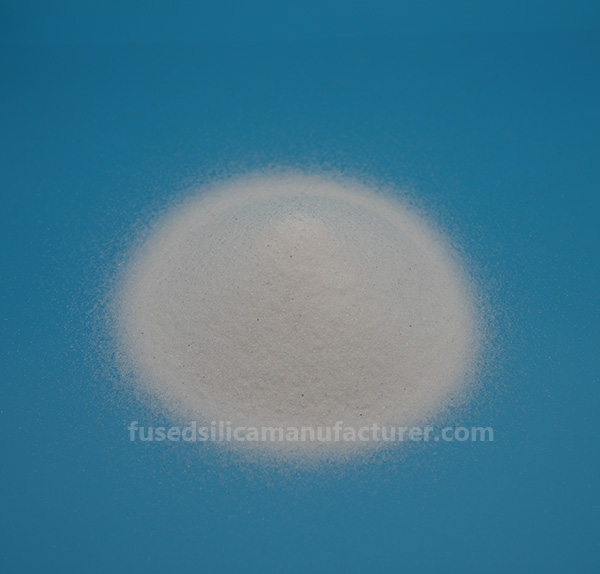
Fused Silica B Grade Applications in Industrial Manufacturing
Introduction
Fused silica is widely recognized for its high purity, low thermal expansion, and excellent thermal shock resistance. Based on chemical purity and particle quality, fused silica is commonly classified into A Grade, AB Grade, and B Grade.
Among them, Fused Silica B Grade offers an excellent balance between performance and cost, making it a preferred choice for many industrial applications where ultra-high purity is not mandatory.
This article introduces the main applications, advantages, and recommended uses of Fused Silica B Grade in refractory, foundry, and construction industries.
What Is Fused Silica B Grade?
Fused Silica B Grade is produced from high-quality silica sand through electric fusion, followed by crushing, magnetic separation, and grading. Compared with A Grade, B Grade typically has:
- Slightly higher impurity levels (Al₂O₃, Fe₂O₃)
- Stable SiO₂ content suitable for industrial use
- Excellent thermal stability and insulation properties
- More competitive cost for large-volume consumption
Because of these characteristics, B Grade fused silica is widely used in non-critical thermal environments and cost-sensitive applications.
Main Applications of Fused Silica B Grade
Refractory Materials
One of the most common applications of Fused Silica B Grade is in the refractory industry.
Typical uses include:
Neutral ramming mass
Silica-based castables
Insulating refractory layers
Backup lining for induction furnaces
B Grade fused silica provides:
Low thermal expansion
Good resistance to thermal shock
Stable performance under repeated heating cycles
It is especially suitable for steel, iron, and non-ferrous metal furnaces where economic efficiency is important.
- Foundry Industry
In the foundry sector, Fused Silica B Grade is widely used due to its excellent dimensional stability at high temperatures.
Applications include:
Foundry coatings
Molding and core materials
Shell molding backup materials
Thanks to its low thermal expansion, B Grade fused silica helps:
Reduce casting defects
Improve surface finish
Minimize cracking caused by thermal stress
- Thermal Insulation Products
Fused Silica B Grade is also used in thermal insulation boards and shapes, such as:
Calcium silicate insulation products
High-temperature insulation panels
Industrial kiln insulation layers
Its low thermal conductivity and heat resistance make it ideal for energy-saving applications in industrial furnaces and kilns.
- Construction and Special Mortars
In construction materials, Fused Silica B Grade is used as a functional filler in:
High-temperature mortars
Acid-resistant mortars
Special industrial flooring systems
It improves:
Heat resistance
Chemical stability
Long-term durability of construction products
Advantages of Using Fused Silica B Grade
Cost-effective solution for large-scale applications
Excellent thermal shock resistance
Low thermal expansion coefficient
Stable performance at high temperatures
Wide particle size availability
These advantages make B Grade fused silica an ideal material for industrial users seeking reliable performance at a reasonable cost.
How to Choose the Right Grade of Fused Silica?
When selecting fused silica, consider:
Operating temperature
Chemical environment
Purity requirements
Budget and consumption volume
👉 B Grade is recommended when:
Ultra-high purity is not required
The application focuses on thermal performance
Cost control is important
Conclusion
Fused Silica B Grade plays a crucial role in refractory, foundry, insulation, and construction industries. With its excellent thermal properties and competitive pricing, it offers a practical solution for many high-temperature industrial applications.
Choosing the right grade of fused silica can significantly improve production efficiency, product quality, and overall cost performance.